United We Stand
A Voice for Ordinary Ugandans — Officially Gazetted Political Party
Officially Gazetted by the Electoral Commission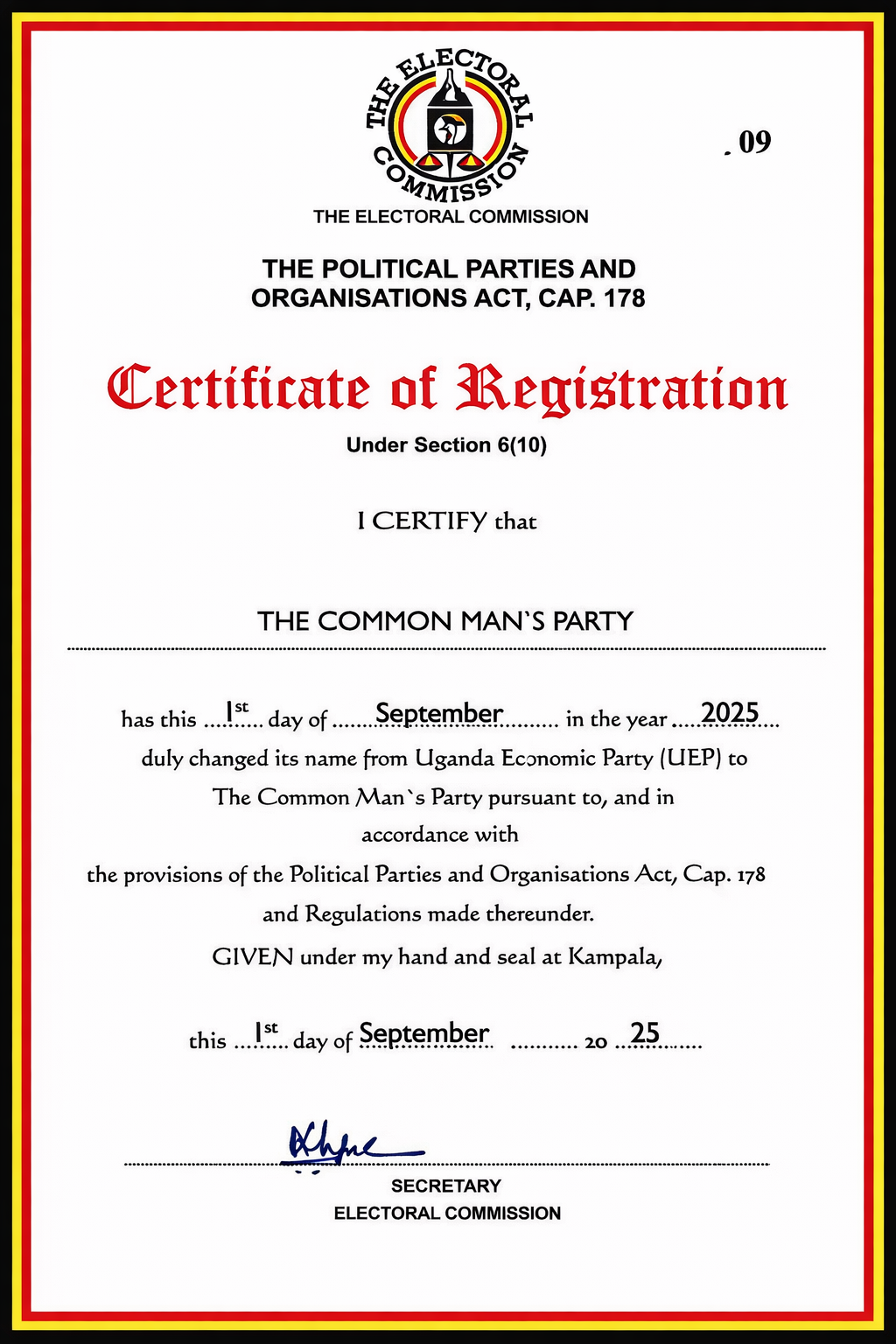
The Common Man's Party (CMP) is a political formation in Uganda, officially launched in 2025 and officially gazetted by the Electoral Commission as a legitimate political party. Founded with Moses Bigirwa serving as Secretary-General, the CMP positions itself as a "grassroots-driven, pro-poor political force" that challenges capitalist-driven politics and fills a perceived void in Uganda's political landscape.
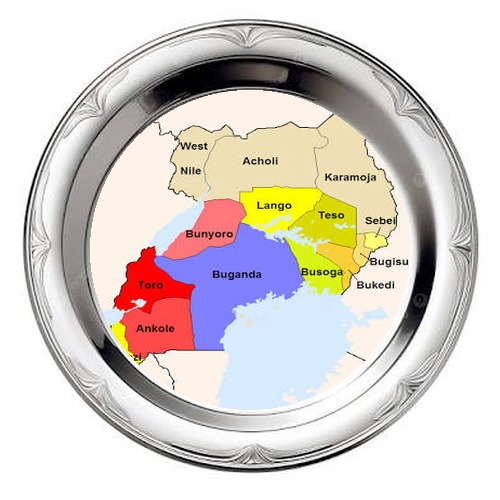
As Secretary General Moses Bigirwa has noted, "there has been a gap in Uganda's political landscape, and that gap must be filled." The party's adoption of the Lusaniya (communal tray) as its symbol reflects its commitment to unity, inclusivity, and shared struggle — the shared table around which all Ugandans gather as equals.
The Common Man's Party is officially registered under the Political Parties and Organisations Act, Cap. 178, gazetted by the Electoral Commission of Uganda on 1st September 2025.
Click the certificate or the Lusaniya logo above to view it full size
Genuine devolution of power to Uganda's regions, ensuring communities have real control over their resources, governance, and development priorities.
Democratic legitimacy and innovative solutions reside in the periphery — the regions, the common people, the grassroots. Governance must flow from the bottom up.
Rejecting capitalist-driven politics in favour of cooperative economics, community ownership models, and development approaches that prioritize ordinary Ugandans.
The party's doctrine is grounded in systems theory, understanding political systems as interconnected wholes and recognizing how regional governance changes create transformative national outcomes.
Respecting and strengthening regional cultural systems, supporting regional languages and cultures while maintaining national standards.
Actively building coalitions with civil society organizations, academic institutions, and international networks committed to regional empowerment and authentic democratic governance.
The Director of Doctrine is responsible for developing, maintaining, and communicating the party's ideological framework and policy positions.
Developing and refining the party's core ideology, ensuring it remains relevant, coherent, and responsive to Uganda's evolving political landscape.
Translating ideological principles into concrete policy positions and programmatic commitments that guide the party's legislative agenda.
Designing and implementing educational programs to ensure all party members understand and can articulate the party's doctrinal positions.
Conducting ongoing research into political, economic, and social trends to inform the party's doctrinal evolution and strategic positioning.
Communicating the party's ideological positions to external audiences, including media, civil society, and international partners.
Providing authoritative responses when the party's positions are challenged or misrepresented, maintaining the integrity of the party's ideological framework under political pressure.
Achieve genuine regional autonomy and devolution of power to Uganda's diverse regions.
Build a grassroots political movement that represents the interests of ordinary Ugandans.
Develop pro-poor economic policies that prioritize community ownership and cooperative models.
Foster national unity through genuine respect for regional cultural identities and languages.
Build strategic coalitions with civil society and international partners committed to democratic governance.
Challenge entrenched patronage networks and systemic corruption through transparent, accountable governance.
The Common Man's Party emerges amidst a rise in newly formed opposition groups in Uganda. The party's emphasis on regional political empowerment aligns with broader trends in African politics toward decentralization and local governance.
Drawing from successful models globally — Spain's autonomous communities, Germany's federal system, and lessons from Ethiopia's ethnic federalism — the CMP adapts these frameworks to Uganda's unique cultural, historical, and political context. Uganda's regional diversity is a strength, not a weakness, and authentic national unity can only be built on genuine regional empowerment.
It is important to distinguish this newly formed Common Man's Party from the historical "Common Man's Charter" introduced by former President Milton Obote in 1969. While both share the "common man" theme, the current party is a distinct political entity in the contemporary Ugandan political landscape.
Sources: Government Information Hub — Electoral Commission Gazettes the Common Man's Party
Be part of a movement that puts the common people first. The CMP is building a Uganda where every region has a voice, every community has power, and every citizen has a stake in the nation's future.
Get Involved Learn About ERP